Aetheria Ecosystems
Aetheria is a world shaped by untamed beauty and ancient balance. From frozen tundra and towering mountain peaks to sun-scorched deserts, endless plains, deep jungles, and storm-worn coasts, each land holds its own unique ecosystems and secrets. Within these varied biomes roam the creatures of Aetheria, beasts both wondrous and fearsome, each playing a vital role in the ever-turning cycle of nature. Explore the environments, wildlife, and natural forces that make Aetheria a realm truly alive.
Gibarra
Gibarra is the largest and most diverse continent in Aetheria, dominating much of the western hemisphere with a landmass so vast that entire climates and ecosystems exist within its borders. From horizon-wide golden plains to frozen northern wastes, Gibarra is a realm of constant contrast, where every region feels like a world of its own.
Its immense territory encompasses a breathtaking range of landscapes: rolling grasslands and fertile plains rich with rivers and wildlife, scorching arid deserts shaped by dunes and hidden oases, lush tropical coasts teeming with life and storms, jagged mountain ranges crowned in snow and ancient stone, deep boreal forests where towering pines blot out the sky, and harsh tundra lands where only the hardiest creatures endure.
Beyond its natural beauty, Gibarra is also one of Aetheria’s greatest centers of civilization, trade, and conflict. Its rivers, coasts, and fertile lands have allowed kingdoms, tribes, noble houses, and wandering peoples to flourish for centuries. Yet even with cities rising across its lands, vast portions of Gibarra remain untamed.
Plains
The Gibarra Plains stretch endlessly across the heart of Gibarra, a vast inland sea of golden fields, rolling prairies, and windswept grasslands where the horizon seems to meet the sky itself. This immense biome is defined by fertile black soils, open skies, and seasons that shape the land in dramatic ways. Deep-rooted prairie grasses enrich the earth year after year. Creating some of the richest farmland in all of Aetheria. These nutrient-dense soils support thriving farming settlements, endless grazing lands, and some of the largest food supplies on the continent.
Across the plains roam massive herds of cattle, antelope, wild horses, and native grazing beasts, following ancient migration paths that have existed for centuries. Seasonal wildflower blooms transform stretches of grassland into brilliant oceans of color, attracting insects, birds, and countless smaller creatures that sustain the wider ecosystem. Predators stalk the tall grasses, while burrowing animals aerate the soil beneath the surface, ensuring the land remains healthy and alive.
Mighty rivers fed by distant mountains cut across the plains, bringing fresh water and carving life-giving valleys through the earth. These waterways flood during rainy seasons, replenishing the soil with rich sediment before retreating and leaving behind dry riverbeds that become natural roads. For generations, traders, caravans, and nomadic tribes have followed these hardened routes, linking distant towns and cultures across the open land. At the center of this region lies Long Lake, the largest lake in Aetheria, whose vast waters provide fish, fertile shoreline marshes, drinking water, and refuge for migrating animals. Entire communities depend on its life-giving presence.
The steady winds of the Gibarra Plains shape both land and people. They bend the grasses in endless waves, drive seasonal storms across the horizon, and power mills in larger settlements. Summers can be blistering beneath cloudless skies, while winters bring biting cold fronts that sweep unhindered across the open country. Lightning storms are common, igniting natural grass fires that clear dead growth and allow fresh life to emerge an essential cycle seen in many real-world grasslands.
Though beautiful and abundant, the plains remain untamed and ever-changing. Droughts can turn fields brittle, floods can reshape rivers overnight, and storms can swallow travelers in walls of dust and thunder. Yet for those who understand its rhythms, the Gibarra Plains are a land of unmatched opportunity, where nations rise, tribes roam free, and the endless grass remembers every footstep that crosses it.

Arcanines
Arcanines are unique creatures to Aetheria as they have the innate ability to smell traces of magic. The reasons how are still a mystery but their presence in history and their use, have been for centuries. They are only found naturally in the southern hills of Gibarra, now with breeding and a need for their gift many Nobel houses own them for security. The Arcanine is now a very tame animal, but wild populations are dwindling.
With the Arcanine having such a large use in the ever growing world of civilization. Their popularity continues to grow. There primary use is now shifting as these Large beats some the size of wolves, are fiercely loyal even more than some dogs. The Arcanine build lasting bonds and with their long lived lives some as long as 50 years they are becoming mans best friend.

Thornrunner
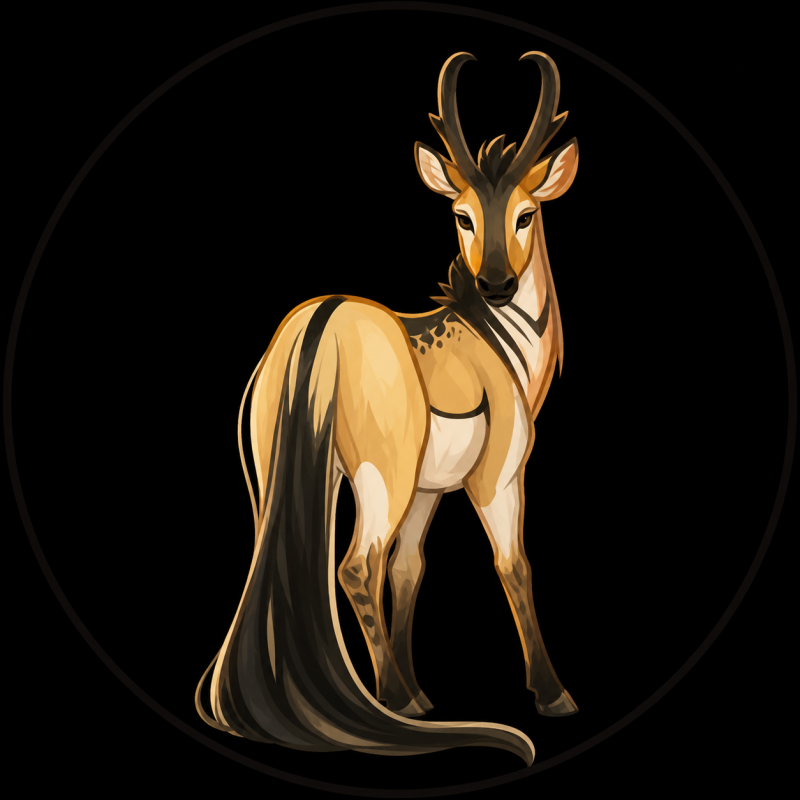
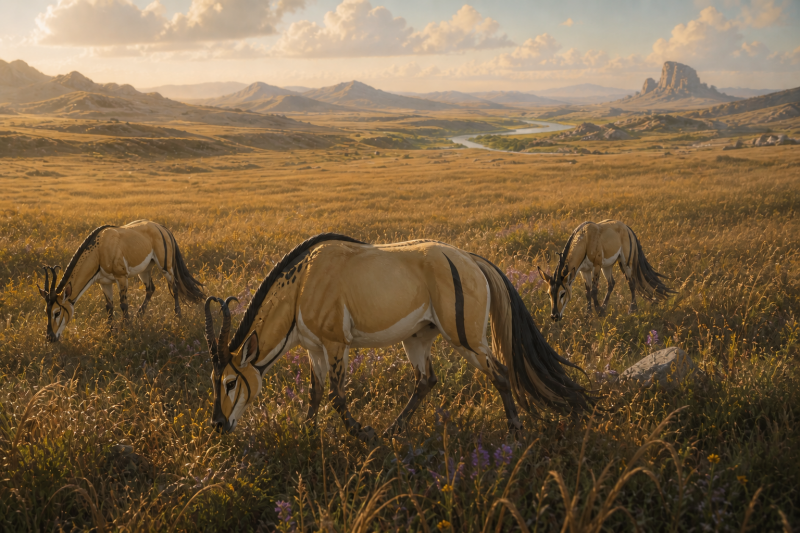
The Great Thornrunner is a beautiful animal who calls these great plains home. They can be found in central, southern and Western Gibarra. Their adaptable animals, who are built to run. The Thornrunner's live in large groups of up to 40-50 individuals. They primarily eat grasses and roots but in the rainy season they love to eat the wild flowers.
Thornrunner's are prey animals as as such are very timid never really letting anything get too close. Despite their smaller stature only standing 5'8 at the shoulder Humans have tried to tame these animals like horses but to no avail. They are mostly hunted for their meat and pelts but in truth their meat is very fatty an gamey and not liked by the masses, some would say its acquired taste.
Plains Cat
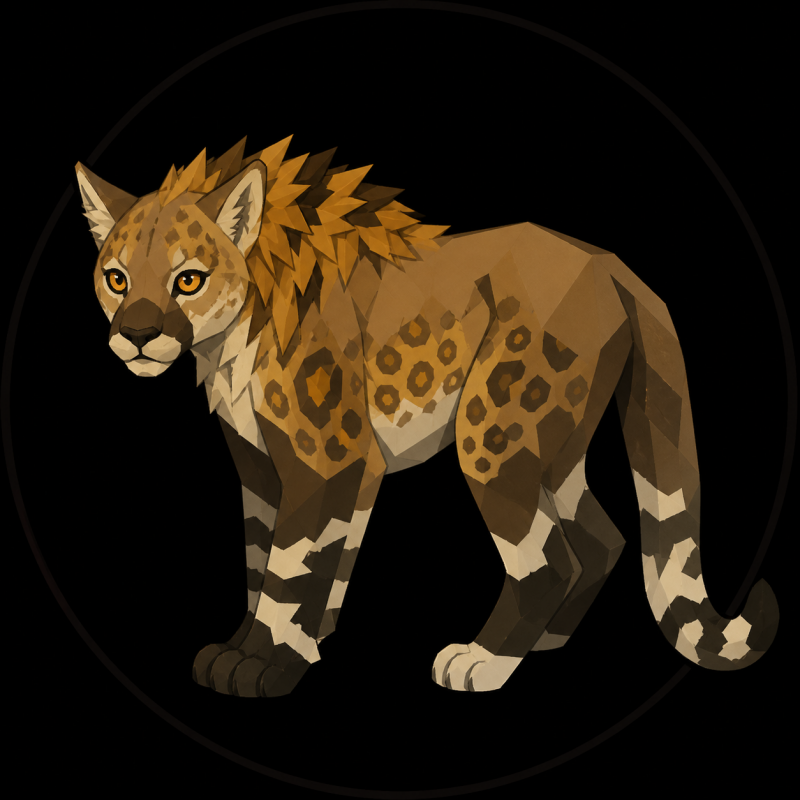
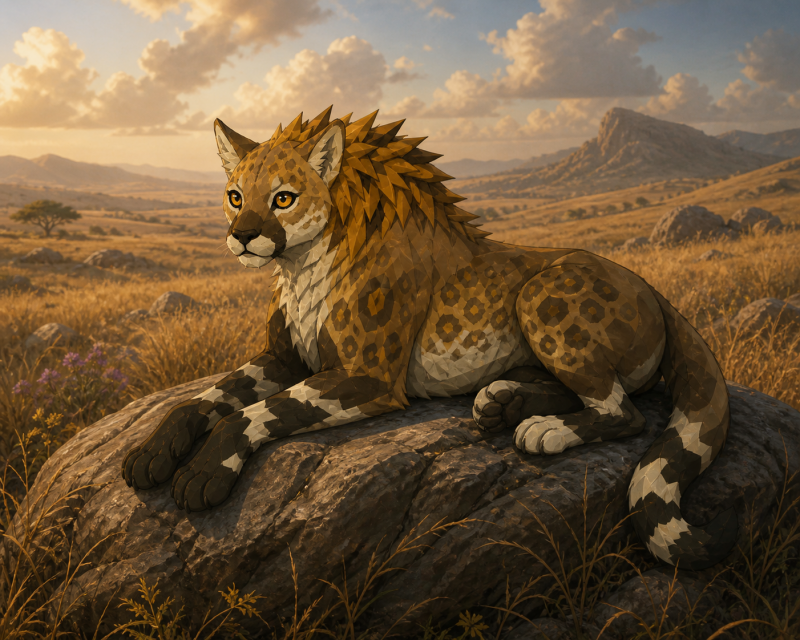
The Plains Cat is Gibarra's Largest Feline predator. They are not as large as Lions or Tigers but they still pack a punch. The Plains cat is a ambush predator relying on their camouflage to sneak up and pounce along with their speed they are formidable animals. These Cats are found in central Gibarra and along the east side of long lake.
Plains cats are fascinating to the feline family as they share attributes of all cats. Small manes like lions spots and stripes like tigers and jaguars, incredible speed like cheetahs and great agility like leopards. Its believed these animals are the first creation from the Feline God Shavari and as such by many are see as good omens and guardians of the past.
Long Lake
At the center of the Gibarra Plains rests Long Lake, the largest freshwater lake in all of Aetheria and one of the most important ecosystems on the continent. Vast enough to hold its own weather patterns. Its immense waters moderate surrounding temperatures, create lake-effect rains, and feed countless rivers and streams that sustain the plains beyond its shores. To those who live nearby, Long Lake is less a lake and more a living world of its own.
The shoreline is incredibly diverse. Northern coasts are lined with rocky bluffs, pine groves, and cold clear shallows, while southern shores transition into fertile wetlands, reed marshes, sandy beaches, and river deltas rich with life. Seasonal flooding creates spawning grounds for fish and feeding grounds for birds. Migratory waterfowl gather here in staggering numbers during spring and autumn, making the skies darken with movement as flocks rest and feed before continuing their journeys.
Beneath the surface, Long Lake is home to layered aquatic habitats. Sunlit shallows support reeds, freshwater grasses, mussels, turtles, and schools of smaller fish. Deeper open waters hold larger predators such as giant pike, lake sturgeon, silver trout, and ancient bottom-feeders said to be older than some kingdoms. In the cold depths, strange blind species and rare luminous creatures thrive where sunlight never reaches. During seasonal turnover, when surface and deep waters mix, nutrients rise upward and trigger bursts of plankton and feeding frenzies across the lake.
The forests and grasslands surrounding Long Lake are equally rich. Deer, elk, boar, wolves, foxes, and great plains cats come to drink at its shores, while beavers and river otters shape the wetlands through dams and channels. Insects and pollinators flourish among the lakeside flowers, supporting birds, amphibians, and reptiles in a tightly balanced web of life.
Long Lake also shapes the climate of the Gibarra Plains. Summers near the water are cooler and wetter than inland regions, while winters are milder along the coast but harsher where lake snows blow inland. Sudden fog banks, violent storms, and rolling thunderheads are common, making the lake both a blessing and a danger to sailors and fishermen alike.

Gibarra Ray
The Gibarra Ray is a majestic creature only found within Long lake's Shores. These gentle giants can grow up to 25-30 ft long and over 15 ft wide at their largest. Many sailors believe to see a Gibarra Ray is a sign for good weather and safe sea Conditions. These rays feed on Plankton and are often see in small family groups filter feeding.
Its Believed that the Gibarra Ray grow deep in the waters of long lake and only come to the surface once they have reached adult hood as no young have ever been seen at the surface, why that is? it is still unknown. The Gibarra Ray once at full adult hood have no natural predators they are the largest creatures to call this lake home. Even the Giant pikes stay clear as their tail can whip at such speed and power it has been seen to slash through ship hulls with ease.

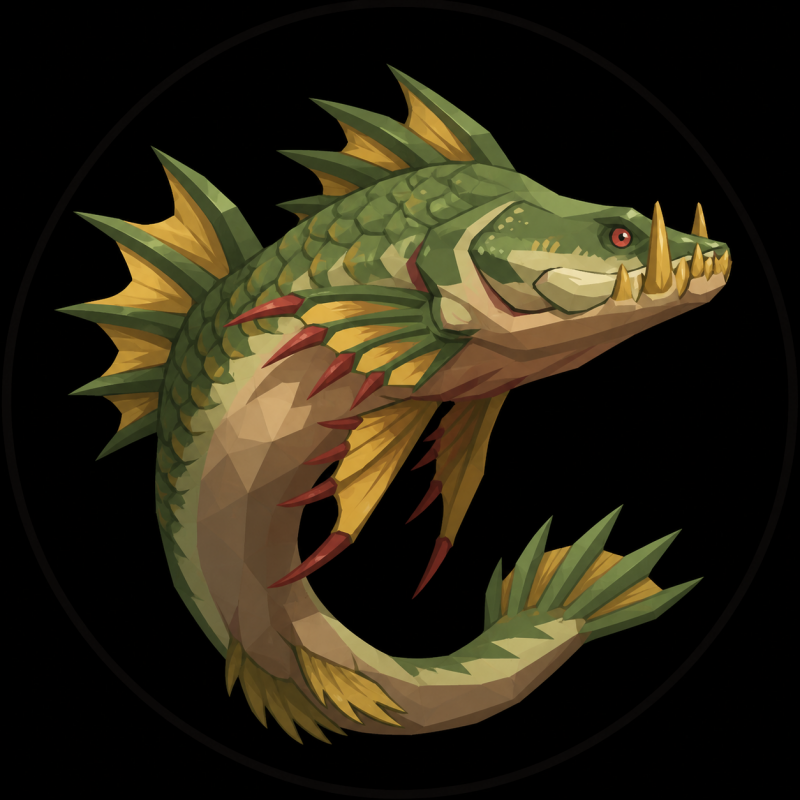
Giant Pike
The Giant Pike is one of the most feared apex predators of Long Lake, a colossal freshwater hunter that lurks in reed beds, drowned forests, and shadowed depths. Growing far larger than common pike, some ancient specimens are said to reach the length of small boats, with massive jaws lined by rows of spear like teeth built to seize slippery prey. Their mottled green scales allow them to vanish among weeds and murky waters before striking with explosive speed.
Patient and territorial, Giant Pike often remain motionless for hours before launching ambush attacks on fish, waterbirds, and even young shoreline mammals. During spawning seasons in early spring, they migrate into shallow marshes and flooded tributaries, where violent clashes between rivals can churn entire coves into foam. Despite their danger, the Giant Pike is vital to Long Lake’s ecosystem. By preying on weak or overabundant species, they keep fish populations balanced and waterways healthy.

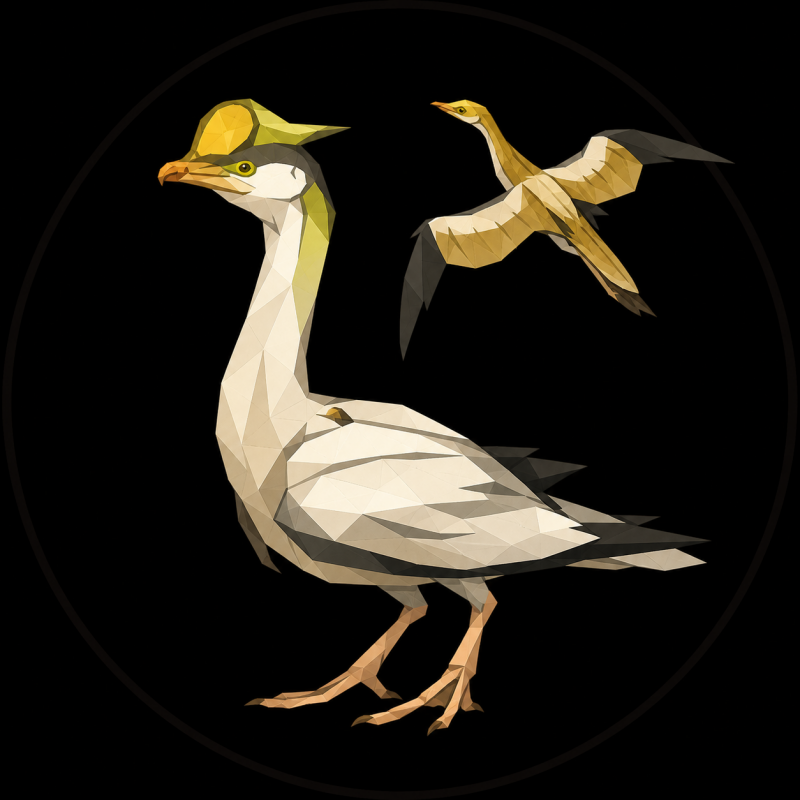
Thunder Birds
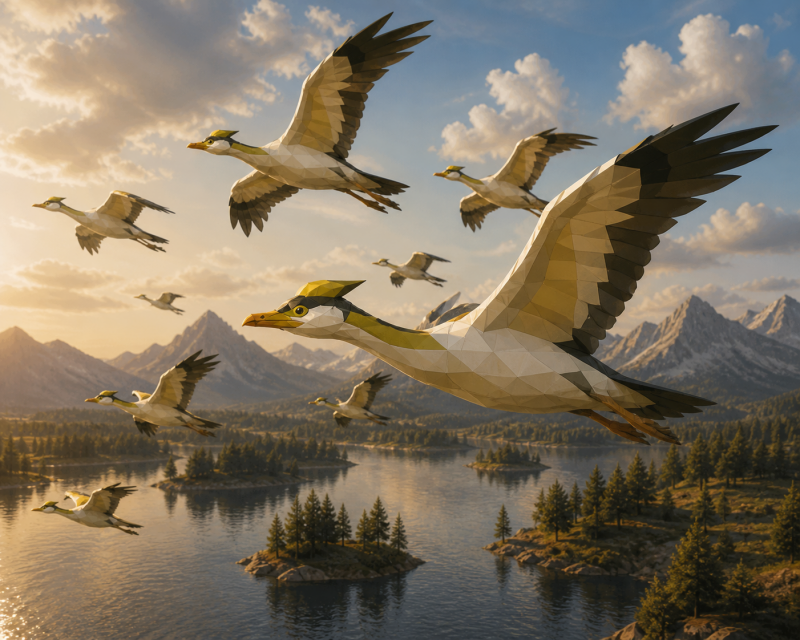
The Thunder Birds are one of the most iconic avian species of Long Lake, famous for their rolling, explosive calls that echo across the water like distant storms. These large migratory waterbirds gather in enormous flocks along the lake’s marshes, reed beds, and open shorelines, where their presence marks the changing of the seasons. Male Thunder Birds are recognized by their pronounced cranial crest, a hollow, hardened structure used to amplify sound. During the Rainy Season, which serves as their mating season, males perform booming territorial displays by forcing air through chambers within the crest, creating sharp concussive calls that resemble cracks of thunder.
Females are considered among the most beautiful birds in Aetheria. Their plumage shines with rich golden and cream feathers, accented by darker flight tips and elegant neck markings. Shed feathers are highly prized throughout nearby settlements and trading cities, often woven into noble garments, ceremonial cloaks, jewelry, and fashionable hats.
Arid Deserts
The Arid Desert of Gibarra are harsh and unforgiving lands shaped by blazing sun, scarce rainfall, and endless windswept sands. Rain may fall only a few times each year, making water the most valuable resource in the region. Temperatures often swing between scorching days and bitterly cold nights, forcing life to adapt through endurance, speed, and efficiency.
Vegetation is sparse but resilient. Deep-rooted shrubs, thorned bushes, hardy grasses, and towering succulents survive by storing moisture or drawing water from far beneath the ground. Seasonal rains can briefly awaken the desert, covering dunes and dry flats in sudden blooms of flowers and attracting insects and migrating animals.
Animal life is specialized for survival. Many creatures are nocturnal, avoiding the daytime heat by hunting or foraging beneath the moon. Burrowers hide underground where temperatures remain cooler, while reptiles, insects, and scavengers dominate the open sands. Larger beasts often travel great distances between watering holes, oases, and hidden springs.
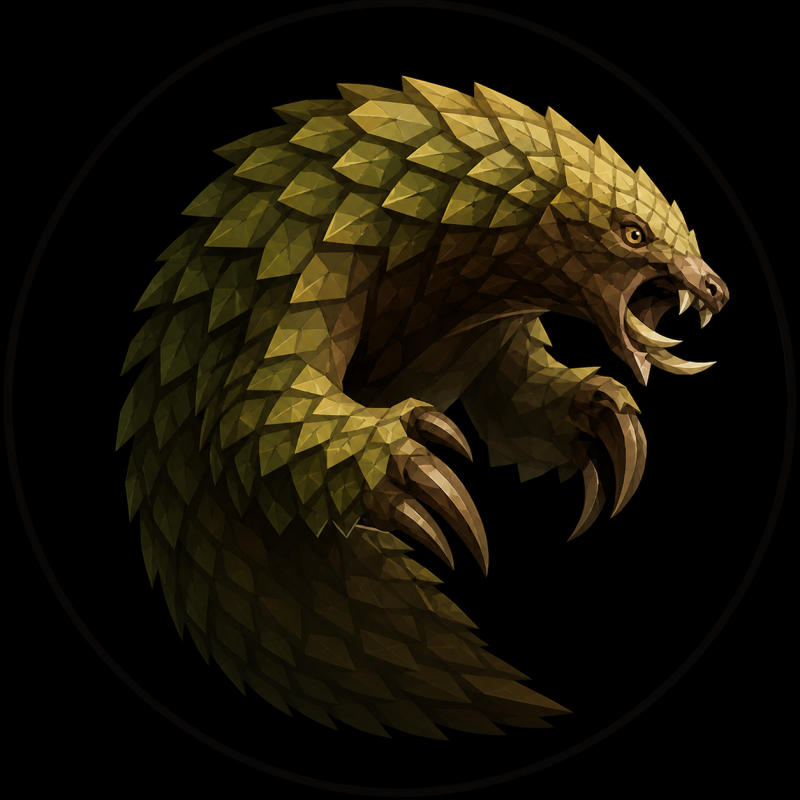
Sandtusk Burrower
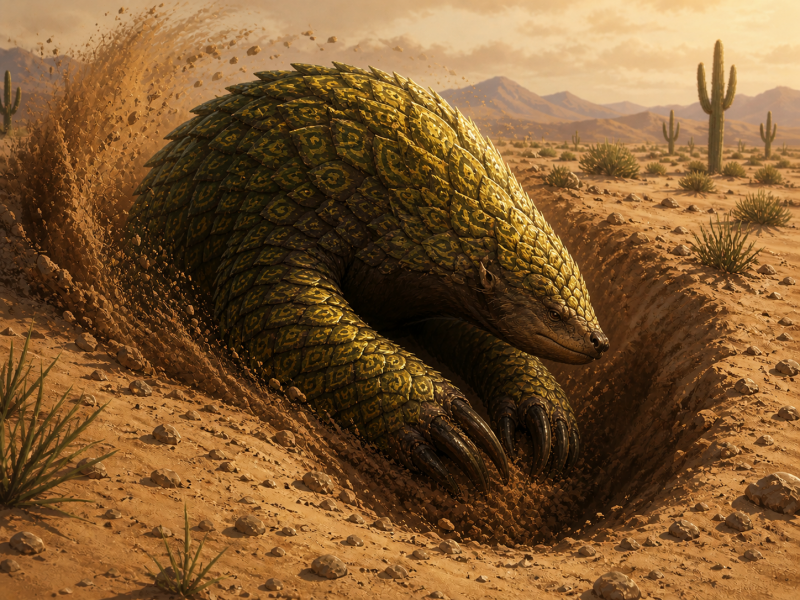
The Sandtusk Burrower is one of the largest land animals native to the Southern Deserts of Gibarra, a heavily armored herbivore famed for its immense strength, stubborn temperament, and mastery of life beneath the sands. Covered in thick overlapping keratin scales, the creature is naturally protected from predators, desert heat, and abrasive sandstorms. Despite their fearsome appearance, Sandtusk Burrowers are strict vegetarians, their favorite food is the sweet, moisture rich fruit of desert cacti.
These animals are expert burrowers, carving vast tunnel systems beneath dunes and rocky flats. Their burrows can stretch for hundreds of feet and are often reused for generations. Males are distinguished by the long curved tusks that emerge from the lower jaw as they mature. Mature males fiercely defend feeding grounds, cactus groves, and access to burrow networks, often charging anything that enters their claimed territory.
Boreal Forest
The Northern Boreal Forests of Gibarra form one of the largest and oldest wilderness regions in Aetheria, a sweeping expanse of towering evergreen woods, frozen rivers, moss-covered earth, and mist-laden valleys that stretch across the cold north. These forests are defined by long winters, short but vibrant summers, and a landscape shaped by resilience. Dense stands of pine, fir, cedar, and spruce dominate the land, their needle-covered branches built to endure snow, wind, and bitter temperatures. Beneath their shadow grows a rich underlayer of mosses, fungi, berries, and hardy shrubs that sustain countless forms of life.
Separating this frozen realm from the warm grasslands to the south stand the mighty Thunder Mountains, a colossal range of jagged peaks and storm-wracked passes that acts as a natural wall between two worlds. Their towering heights block warmer winds from the plains while trapping northern cold fronts beyond them, ensuring the great grass seas of Gibarra never spill into the forests above. Heavy snowfall gathers along the mountains and feeds the rivers that descend into the woodlands each spring, while thunderous storms rolling across the peaks gave the range its name. Without the Thunder Mountains, the plains and forests would slowly merge but instead both biomes remain distinct and powerful in their own right.
The Boreal Forest ecosystem thrives on cycles of cold, melt, and regrowth. During winter, much of the land falls silent beneath snow, with animals relying on thick fur, migration, or hibernation to survive. In spring, melting ice floods streams and marshes, awakening insects, fish, and migratory birds. Summer brings nearly endless daylight and explosive growth, with berries ripening, mushrooms spreading across fallen logs, and prey animals grazing in woodland clearings. Autumn is brief but brilliant, as the forest prepares once more for the deep freeze.
Wildlife here is hardy and powerful. Great elk, moose, forest bison, wolves, lynx, bears, owls, and raven flocks roam beneath the canopy. Smaller creatures such as hares, foxes, squirrels, and burrowing rodents form the backbone of the food chain.
The people who dwell near these woods have learned to respect its moods. Timber settlements, hunters, trappers, and isolated clans survive by following seasonal patterns and using every resource carefully. Rivers serve as roads in summer and frozen highways in winter.
Though harsh and unforgiving, the Northern Boreal Forests are vital to all of Gibarra. They store fresh water, feed rivers flowing south, regulate climate, shelter rare wildlife, and stand as a living barrier between civilization and the wild north.
Stag Tusk Boar
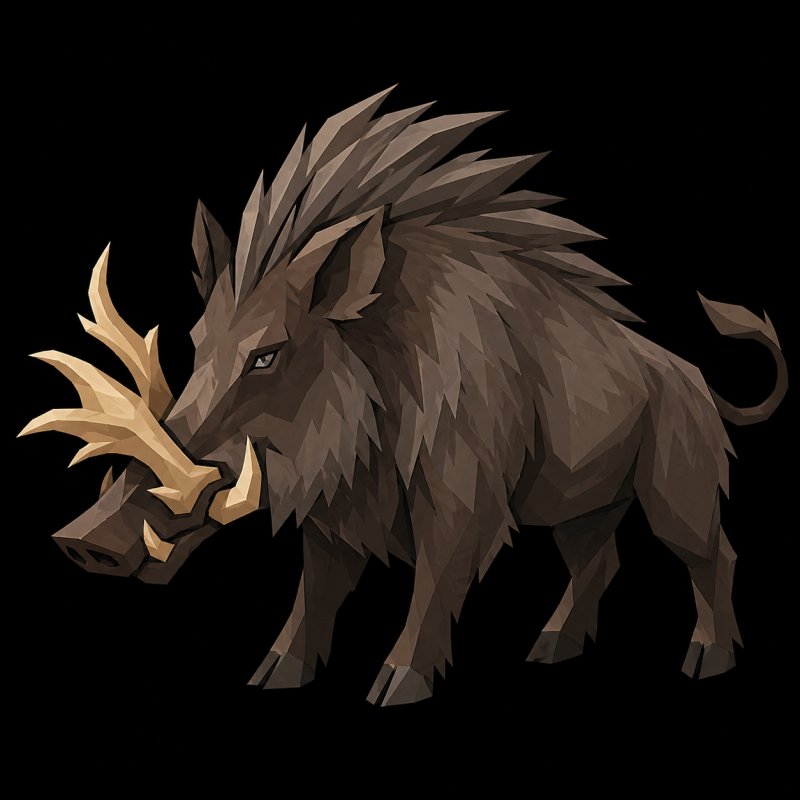
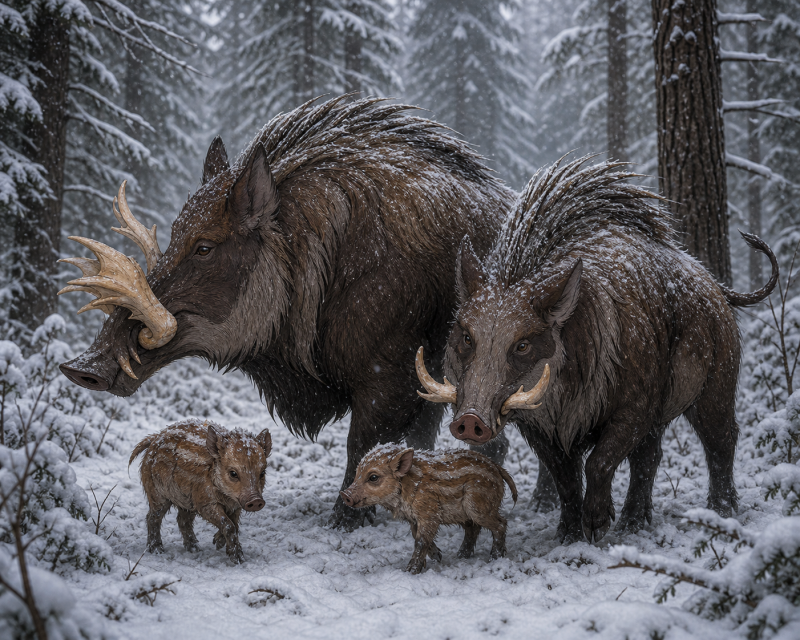
The Stag Tusk Boar is a massive and aggressive beast native to the cold forests and highlands of northern Gibarra. Covered in thick bristled fur and armed with powerful tusks, dominant males grow branching antler like tusks from the snout. Used for combat, rooting through frozen earth, and defending their sounders. Fierce, intelligent, and notoriously difficult to bring down, they are among the most respected animals of the north.
To House Orthon and the orc clans of Northgrove, the Stag Tusk Boar is a sacred symbol of strength, endurance, and rightful dominance over the wild. Its image is carried on banners, carved into halls, and worn as trophies by warriors. Among many northern orc traditions, a youth is not recognized as a full adult until they complete The Boar Hunt tracking, facing, and slaying a Stag Tusk Boar with courage. To return victorious with tusk, hide, or blood. to be successful is to earn the right to stand among the warriors and be called Orc in full honor.
Great Elk
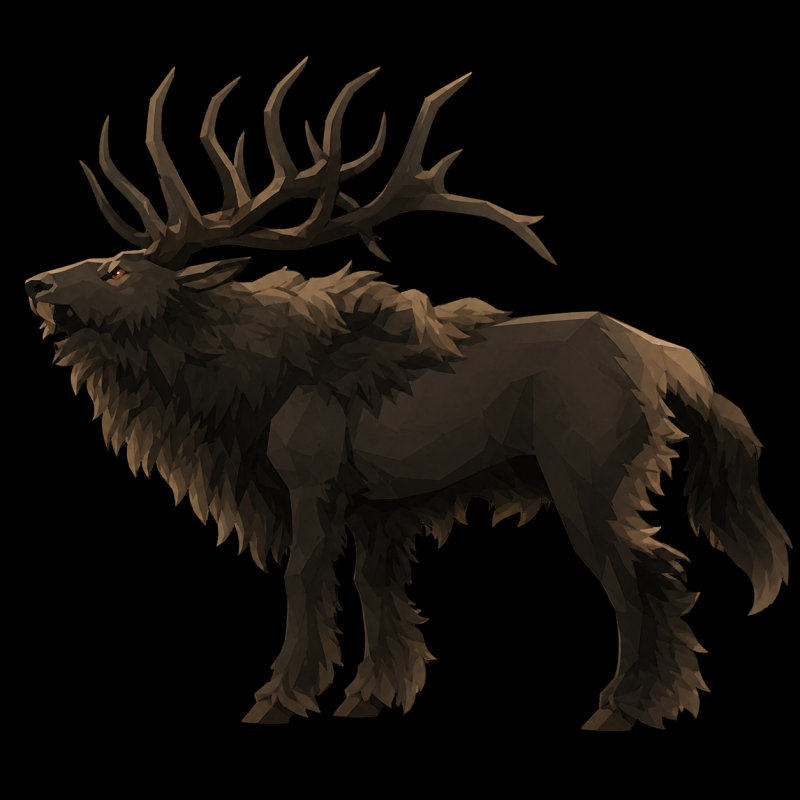
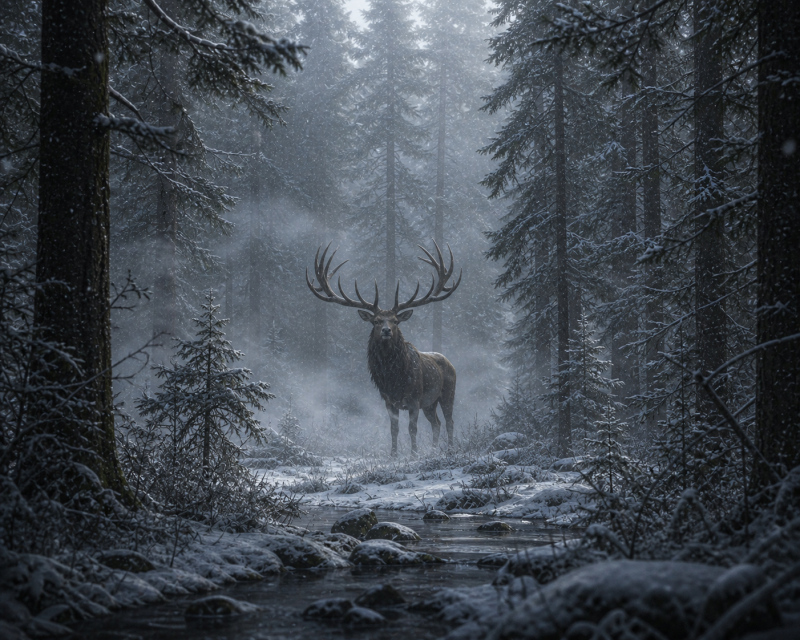
The Great Elk is a towering and majestic beast of the northern wilds, standing nearly twice the height of a common elk and crowned with immense sprawling antlers that can span wider than a wagon. Thick winter fur protects them from the harshest snows, allowing them to roam deep forests, frozen valleys, and mountain passes where few creatures dare travel.
Exceptionally rare and elusive, Great Elk are seldom seen by mortal eyes. Many believe that encountering one means fate has guided you true, that you are walking the right path in life or journey. Hunters and locals refuse to harm them, considering the creature sacred and a blessing of the wild.
Their haunting bugles roll through the trees like distant horns of heaven, soft yet powerful, carrying an almost angelic tone that can silence an entire forest. To hear the call of a Great Elk is remembered for a lifetime; but to see one is remembered for generations.
Tundra
The Frozen North marks the farthest reaches of Gibarra, a harsh and majestic tundra where snowbound wilderness stretches beyond sight and winter rules for most of the year. This remote biome is defined by frozen plains, jagged mountain ranges, glacier-fed valleys, and the immense ice caps that crawl across the Saureed Sea like drifting continents of white. It is one of the least forgiving regions in Aetheria, yet one of the most ecologically unique.
At the heart of the region stand the Whitestone Mountains, an ancient range of towering peaks wrapped in frost and carved by ages of wind and ice. Their slopes are home to alpine forests of hardy pine and frostwood at lower elevations, while the upper reaches remain barren stone and snow. Meltwater from these mountains feeds rivers during the brief summer thaw, creating seasonal wetlands, frozen lakes, and narrow valleys where life briefly flourishes. Avalanches, icefalls, and sudden storms make the mountains as dangerous as they are beautiful.
Beyond the mountains lie open tundra fields where the soil remains locked beneath permafrost for most of the year. Only the topmost layer softens during the short warm season, allowing mosses, lichens, sedges, and low flowering plants to bloom in a burst of life. These hardy plants support migratory herds of elk, caribou, shaggy bison, and other cold-adapted grazers that roam vast distances in search of food. Burrowing creatures tunnel beneath the snow for warmth, while foxes, wolves, and Polar Bears follow the herds across the open land.
The Saureed Sea is dominated by colossal ice caps and drifting pack ice that shape the entire northern climate. These frozen waters serve as prime grounds for marine predators and prey alike such as seals, walrus, penguins, Orcas and whales that migrate along the ice edges. During warmer months, cracks in the ice create nutrient-rich waters where fish gather in enormous numbers, drawing seabirds and coastal hunters alike. The movement of sea ice also influences weather across the north, bringing dense fogs, freezing winds, and sudden blizzards inland.
Despite its severity, the Frozen North is far from lifeless. Many animals here have evolved thick fur, layered fat, compact bodies, and seasonal camouflage to survive. Some hibernate through the darkest months, while others migrate or store food beneath snow and stone. Predators rely on patience and endurance more than speed, and every creature is shaped by the need to conserve energy in a land where resources are scarce.
Though often seen as empty or hostile, the Frozen North is a vital part of Gibarra’s balance. Its glaciers feed rivers far to the south, its seas sustain migratory life, and its mountains store ancient minerals beneath the ice.
Leather Backs
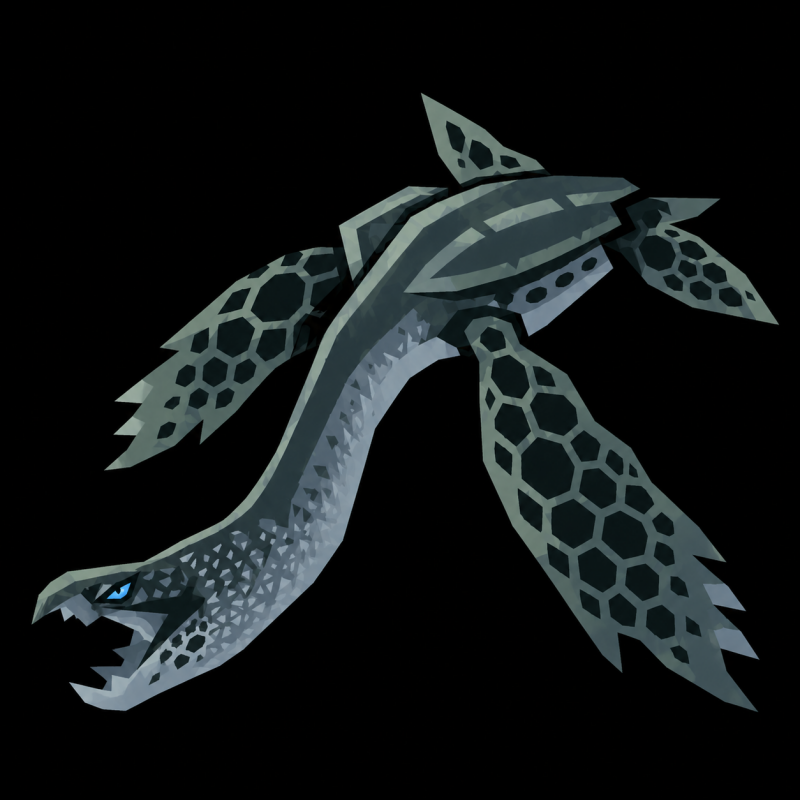
The Leatherback is a massive sea beast native to the icy waters of the Saureed Sea, renowned for its endurance, migration, and ability to thrive where few large creatures can survive. Unlike many marine reptiles, Leatherbacks are warm-blooded, allowing them to remain active in the freezing northern oceans. Their bodies are protected by a thick, leathery hide layered with dense fat that shields them from the brutal cold.
Graceful despite their size, Leatherbacks feed primarily on drifting jellyfish, shoals of small fish, and other soft-bodied sea life. Each year, when the seas begin to shift, Leatherbacks undertake vast migrations southward to warmer coasts where they gather to mate. Females crawl ashore on remote beaches to bury clutches of eggs deep in the sand before returning to the sea.
Vidraak
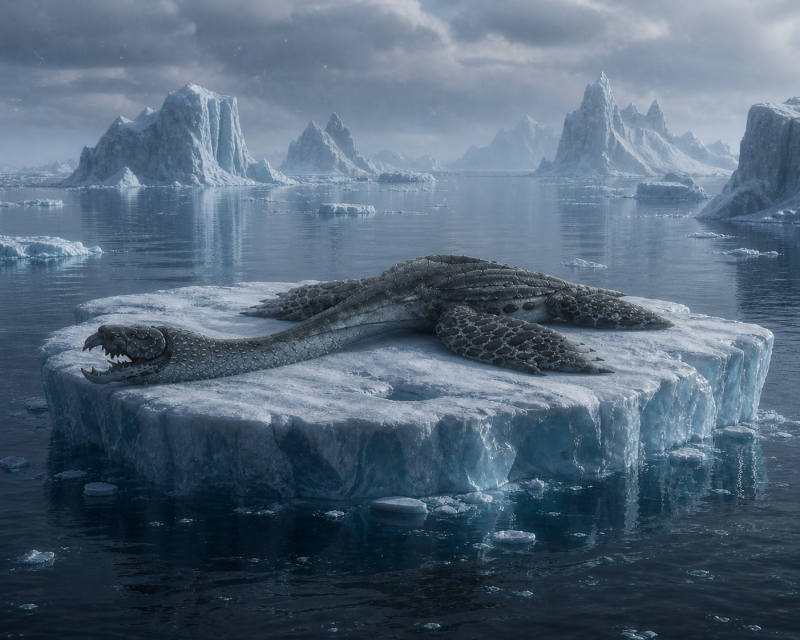
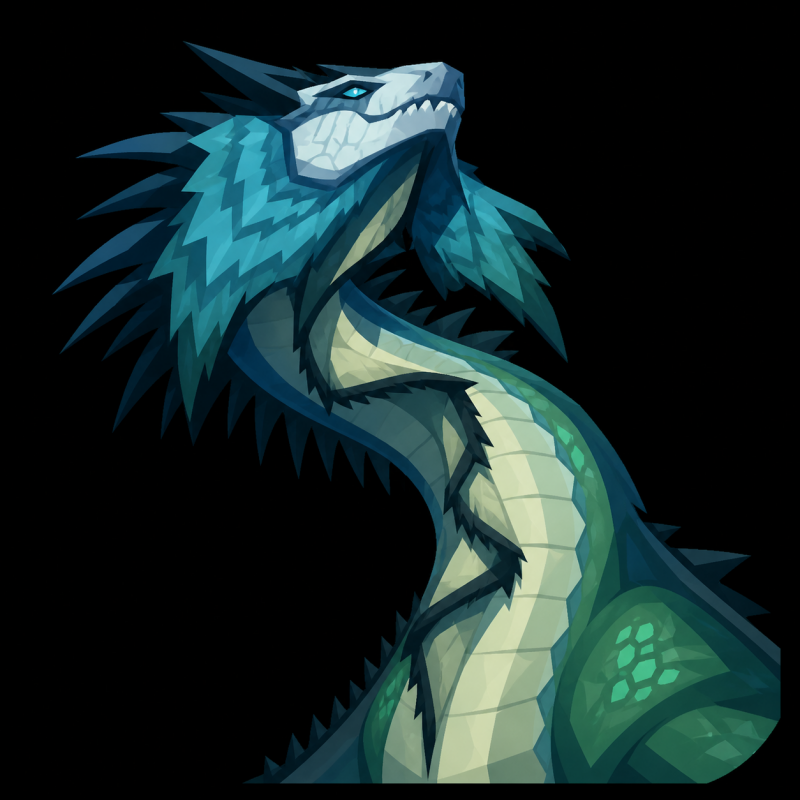
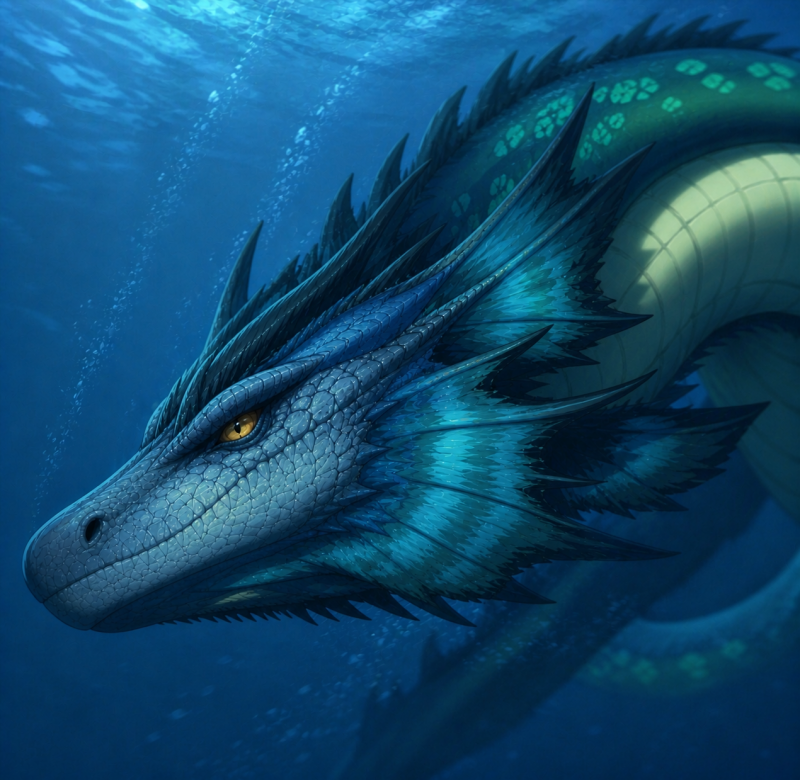
The Vidraak is one of the most feared apex predators of Aetheria’s seas, a colossal serpentine sea beast built for speed, power, and relentless pursuit. With powerful jaws, razor sharp teeth, and immense strength, Vidraak prey upon some of the ocean’s largest animals, including Leatherbacks, whales, giant fish, and even smaller or weakened members of their own kind.
Though most commonly found in the cooler northern waters, where food is plentiful and currents favor their migrations, Vidrraks have occasionally been sighted in warmer southern seas during long hunts or breeding movements. Their sleek bodies and endurance allow them to cross vast distances beneath the waves with little warning. Highly territorial and solitary, an adult Vidrrak dominates whatever stretch of sea it claims often attacking ships as they view them as potential threats.
Create Your Own Website With Webador